















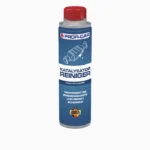

Original price was: 445 EGP.420 EGPCurrent price is: 420 EGP.
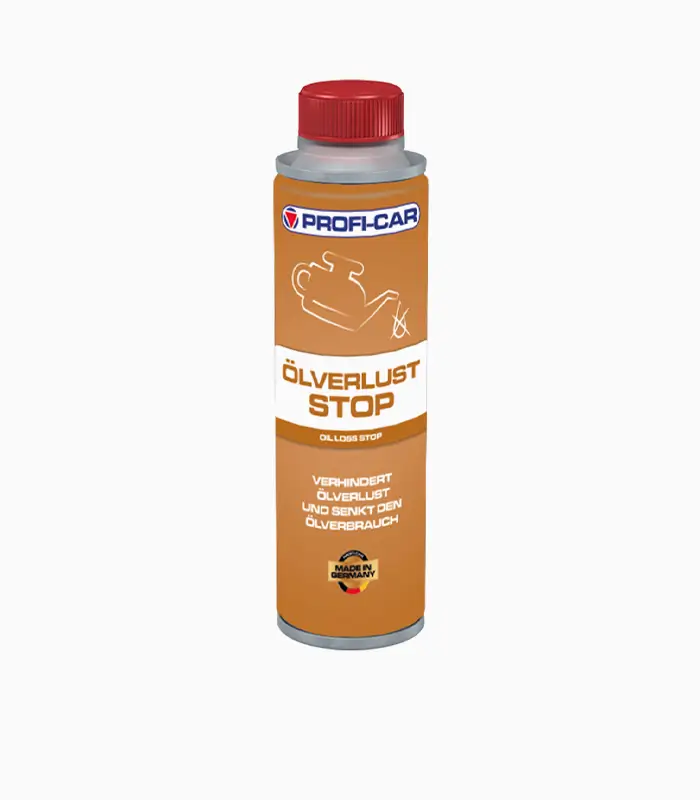
PROFI-CAR Oil Loss Stop is an engine oil additive that helps reduce oil leakage and oil consumption caused by hardened or aged seals. It helps restore seal flexibility, improve engine sealing, and reduce blue exhaust smoke while being suitable for gasoline, diesel, and LPG engines and compatible with mineral and synthetic engine oils.
| Brand | PROFI-CAR |
|---|---|
| Size | 300ml |
| Made in | Germany |
In stock
PROFI-CAR Oil Loss Stop is an engine oil additive specially developed to help reduce oil loss caused by hardened, aged, or worn seals. The treatment works by helping restore the flexibility and original dimensions of rubber seals inside the engine, including oil seals and valve stem seals, thereby helping improve the sealing performance of the engine without requiring removal of the affected components.
As engine seals age, they can become hard and lose their ability to maintain an effective seal. This may allow engine oil to escape internally or externally and can contribute to increased oil consumption. PROFI-CAR Oil Loss Stop is formulated to soften hardened seals and help them regain their flexibility, supporting improved engine tightness and helping reduce oil leakage through seals.
The manufacturer states that the product can help reduce oil consumption, particularly at high engine temperatures, while also regulating the viscosity of the engine oil. By improving the condition of aged seals and supporting better engine sealing, the treatment may also contribute to improved engine compression and smoother overall engine operation.
PROFI-CAR Oil Loss Stop is suitable for gasoline, diesel and LPG engines, including engines equipped with turbochargers or catalytic converters. It can be mixed with commercially available mineral or synthetic engine oils, making it suitable for a wide range of passenger-car engine applications. The manufacturer also states that the product does not clog filters and is not harmful to catalytic converters.
In addition to addressing oil leakage and consumption, the official product information lists several secondary benefits, including helping reduce blue exhaust smoke, reducing engine noise, and reducing the emission of hazardous exhaust gases. The technical data sheet also states that the formulation does not contain harmful solvents or solids.
PROFI-CAR Oil Loss Stop is therefore intended as a practical engine oil leak treatment and seal conditioner for engines where hardened seals are contributing to oil leakage or increased oil consumption. It is added directly to warm engine oil, preferably shortly after an oil change, and remains part of the engine oil system during normal operation.
It is important to distinguish between oil loss caused by hardened or aged seals and oil loss caused by mechanical damage, cracked components, or severe engine wear. An oil additive can support the condition of suitable seals, but it should not be considered a replacement for mechanical repair when a component is physically damaged.
| Specification | Details |
|---|---|
| Product Type | Engine oil additive |
| Main Function | Oil leak and seal treatment |
| Primary Application | Hardened or aged engine seals |
| Suitable Engines | Gasoline, Diesel and LPG |
| Turbocharged Engines | Suitable |
| Catalytic Converters | Suitable |
| Oil Compatibility | Mineral and synthetic engine oils |
| Main Effect | Helps restore seal flexibility |
| Oil Consumption | Helps reduce oil consumption |
| Additional Function | Helps regulate oil viscosity |
| Filter Compatibility | Does not clog filters |
| Recommended Oil Quantity | Approximately 3–6 liters* |
These specifications are based on the current official PROFI-CAR product page: www.profi-car.com
It is designed to help reduce engine oil leakage caused by hardened or aged seals and to restore flexibility to rubber seals such as oil seals and valve stem seals.
Yes. Reducing oil consumption is one of the functions specifically stated by PROFI-CAR, particularly in situations where oil consumption is related to deteriorated seals.
It can help reduce or stop oil leakage through suitable hardened seals by restoring their flexibility. It should not be considered a replacement for mechanical repair when the leak is caused by a cracked, broken, or severely damaged component.
Yes. The manufacturer states that the product can be mixed with commercially available mineral and synthetic engine oils.
Yes. PROFI-CAR specifies the product for gasoline, diesel and LPG engines.
Yes. The official application information includes engines with or without turbochargers.
The manufacturer states that the product is not harmful to catalytic converters.
The official technical data sheet states that the product does not contain harmful solvents or solids.
PROFI-CAR recommends adding the treatment to warm engine oil, preferably shortly after an oil change.
The official technical data sheet specifies approximately 3–6 liters of engine oil per treatment.
Only logged in customers who have purchased this product may leave a review.
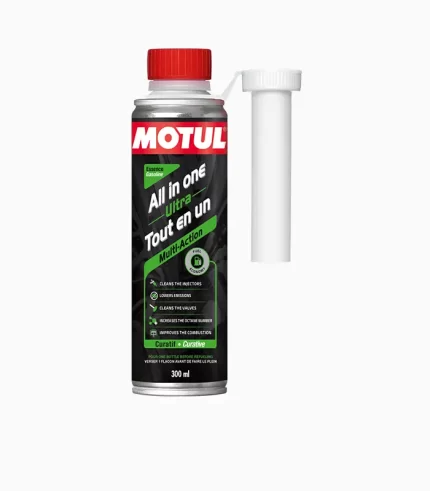
Complete concentrated multi-action curative cleaner for all types of gasoline engines, with injection systems or carburetors, naturally aspirated or turbocharged, with or without catalytic converter or particulate filter, using all types of gasoline fuels, lead or unleaded, Ethanol, LPG and biofuels.

No account yet?
Create an Account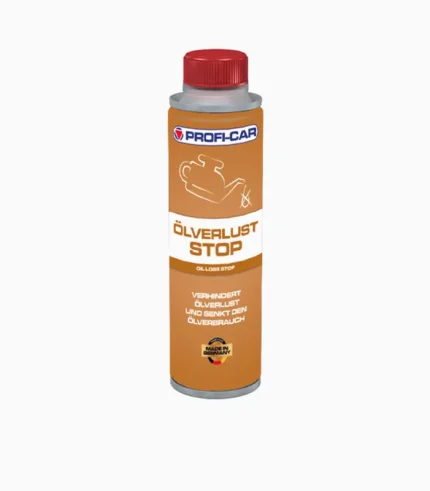
In stock















































Reviews
There are no reviews yet